Serving Reading, PA and surrounding areas. (484) 516-0656
Cracks, bowing walls, and sticking doors are warning signs. We diagnose the problem, pull the permit, and fix it right - so your home is stable and protected.
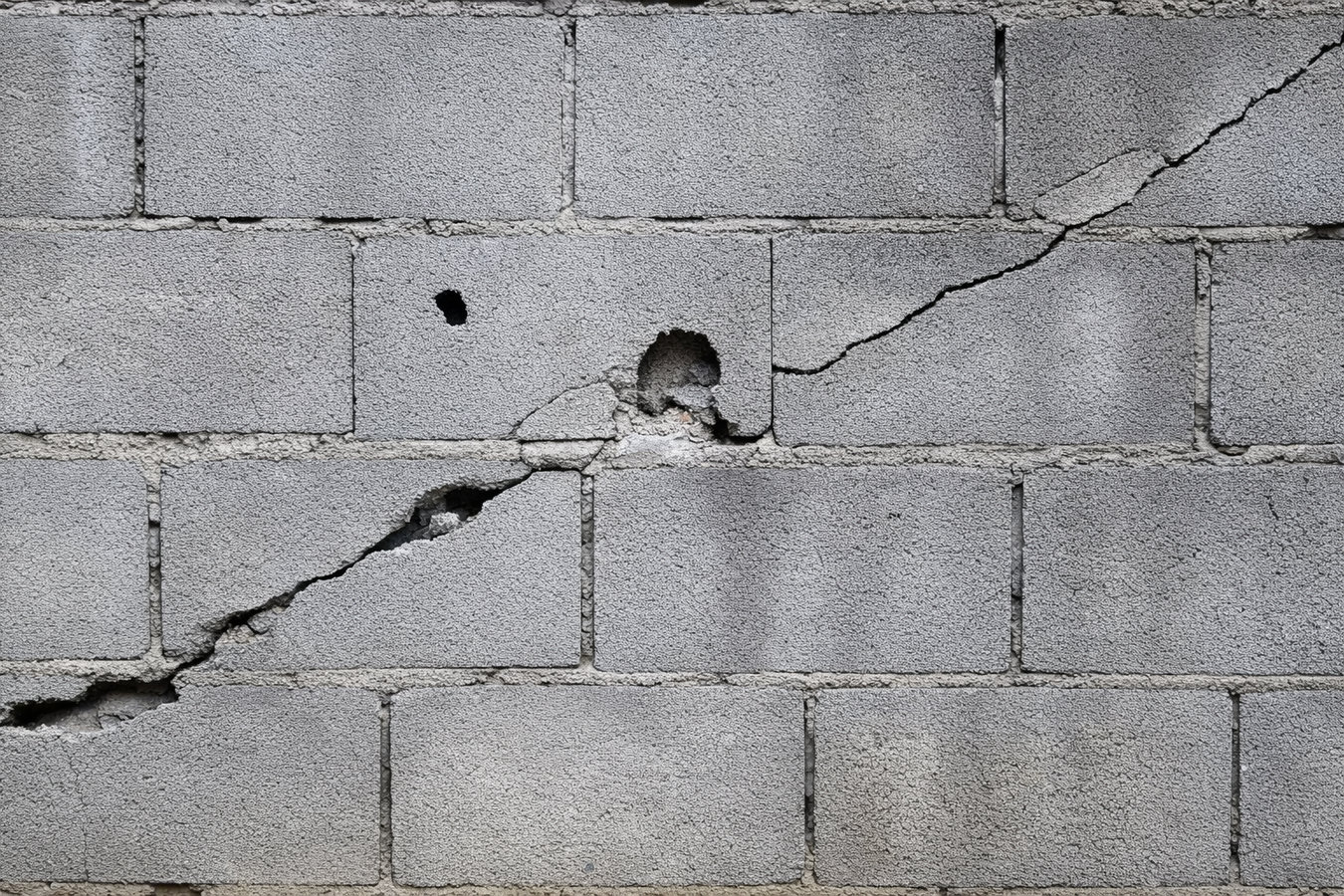
Foundation repair in Reading, PA addresses the structural base that holds your home up - using methods like steel piers, wall anchors, or crack injection to stop movement and restore stability, with most residential jobs completed in one to three days.
If you live in an older Reading neighborhood, the signs can be easy to dismiss at first: a door that does not quite close the way it used to, a crack in the plaster you keep meaning to patch. But in a city where a large share of homes were built on stone rubble or unreinforced brick foundations before 1940, these small signals often point to something that grows worse with every freeze-thaw cycle. The good news is that problems caught early are almost always less expensive to fix.
If you are also dealing with water coming through the walls, it is worth asking whether chimney repair or other masonry work on your home might be contributing to moisture problems at the same time - fixing both in one project often saves money compared to two separate visits.
If a door that used to swing freely now drags or a window jams, your home's frame may be shifting because the foundation beneath it has moved. In Reading, this often shows up each spring right after the ground thaws. It does not always mean a serious problem, but it is worth having someone look.
Cracks running at a 45-degree angle from the corners of door frames or window openings are a sign the foundation is settling unevenly. Unlike hairline cracks that run straight up, diagonal cracks suggest one part of the house is moving more than another. If they are widening over time, call a contractor rather than just patching them.
Stand in your basement and look at the walls straight on. If a wall curves inward at the middle or you see horizontal cracks running across the blocks, the soil outside is pushing harder than the wall can resist. This is common in older Reading homes with block or brick foundations. A bowing wall that is left alone will eventually fail.
If your yard slopes toward your house, that water sits against your foundation every time it rains. Over time, moisture erodes mortar in older stone or brick foundations and can cause shifting and cracking. If puddles form near your foundation wall after a storm, that drainage pattern is worth addressing before it becomes structural.
Foundation repair is not a single thing - the right approach depends on what type of foundation your home has, what is causing the problem, and how far the damage has progressed. For homes with cracked or bowing block walls, we use wall anchors and carbon fiber straps to stop the movement and reinforce the wall from the inside. For settled footings, we drive steel piers down to stable soil to lift and stabilize the structure. Hairline cracks in poured concrete walls are addressed with pressure-injected epoxy or polyurethane that bonds the wall back together and seals out water.
Many older Reading homes also have deteriorating stone or brick foundations that need mortar repair and, in some cases, partial or full section rebuilding using modern materials that hold up to Berks County winters. For homes where the foundation wall itself is in good shape but the block system needs a full rebuild or new installation, foundation block wall installation is the right path forward.
Best for bowing or bulging block walls where the structure is being pushed inward by soil pressure.
Best for homes with settled footings where the ground beneath has shifted and the foundation needs to be lifted back to level.
Best for poured concrete walls with hairline or medium-width cracks that need structural bonding and waterproofing.
Best for older Reading homes with rubble stone or unreinforced brick foundations where mortar has deteriorated and walls have shifted over decades.
A large share of homes in Reading were built between the 1880s and the 1950s on stone rubble or unreinforced brick foundations that were never designed to last indefinitely without maintenance. These materials are more prone to crumbling mortar, shifting, and water infiltration than modern poured concrete. Combine that with Berks County's clay-heavy soil, which expands when wet and shrinks when dry, and you have conditions that quietly stress foundations year after year. The freeze-thaw cycle that runs from November through March pushes soil against foundation walls and then releases it, gradually widening cracks and loosening mortar every season.
We work throughout the greater Reading area, including Exeter and Muhlenberg, where many of the same older housing conditions and soil types create similar foundation challenges. Dense neighborhood layouts with narrow side yards are common across all of these areas, so we plan for access constraints before we show up - not after.
We ask a few questions about what you are seeing, then schedule a diagnostic visit. This is not a sales pitch - it is a 30-to-60-minute walk-through of your basement and the outside of your home to understand what is actually happening.
After the inspection you receive a written estimate that explains the problem, the recommended repair method, and why. Get at least two estimates for any job over $5,000. We reply to all estimate requests within 1 business day.
We pull the required building permit from the City of Reading before any tool hits your foundation. This typically adds a few business days to the start date. Use that time to clear the work area in your basement.
Most jobs take one to three days on-site. When work is complete, a city inspector visits to verify it meets code. Your contractor coordinates this - you just need to be available if the inspector has questions.
We reply within 1 business day. No pressure, no same-day sales tactics - just a straight answer about what your foundation needs.
(484) 516-0656We carry the licenses and insurance Pennsylvania requires for structural masonry work. You get documented, permitted repairs with a paper trail that holds up when a buyer's inspector asks about your foundation later.
Reading's mix of clay-heavy soil, weathered shale bedrock, and pre-1940 stone and brick foundations requires specific knowledge. We match repair methods to local conditions rather than applying a one-size approach.
Every repair comes with a written warranty you can hand to the next owner if you sell. A strong warranty is one of the clearest signs a contractor stands behind the work. Ask us what ours covers before you sign anything.
You will hear from us within one business day of any inquiry. Before work starts, you receive a day-by-day schedule so you know exactly what to expect - no surprise equipment in your driveway on a Monday morning.
The Foundation Repair Association recommends working with contractors who provide written, transferable warranties and pull required permits before starting structural work. Pennsylvania's Uniform Construction Code requires permits for structural foundation repairs - and we handle that process for every job. Put those together and you get a repair that is documented, inspected, and protected long after we leave your property.
Many foundation problems come with related masonry issues. These services are often completed alongside foundation repair.
Crumbling chimney mortar and cracked crowns let water into your walls and worsen foundation moisture problems - repairing both in the same season is the most efficient approach.
Learn MoreWhen a deteriorated foundation wall is beyond repair, a full block wall installation gives you a structurally sound replacement built to current Pennsylvania code.
Learn MoreEvery winter that passes without a repair is another freeze-thaw cycle widening the cracks. Reach out now and we will get someone out to look at it within the week.