Serving Reading, PA and surrounding areas. (484) 516-0656
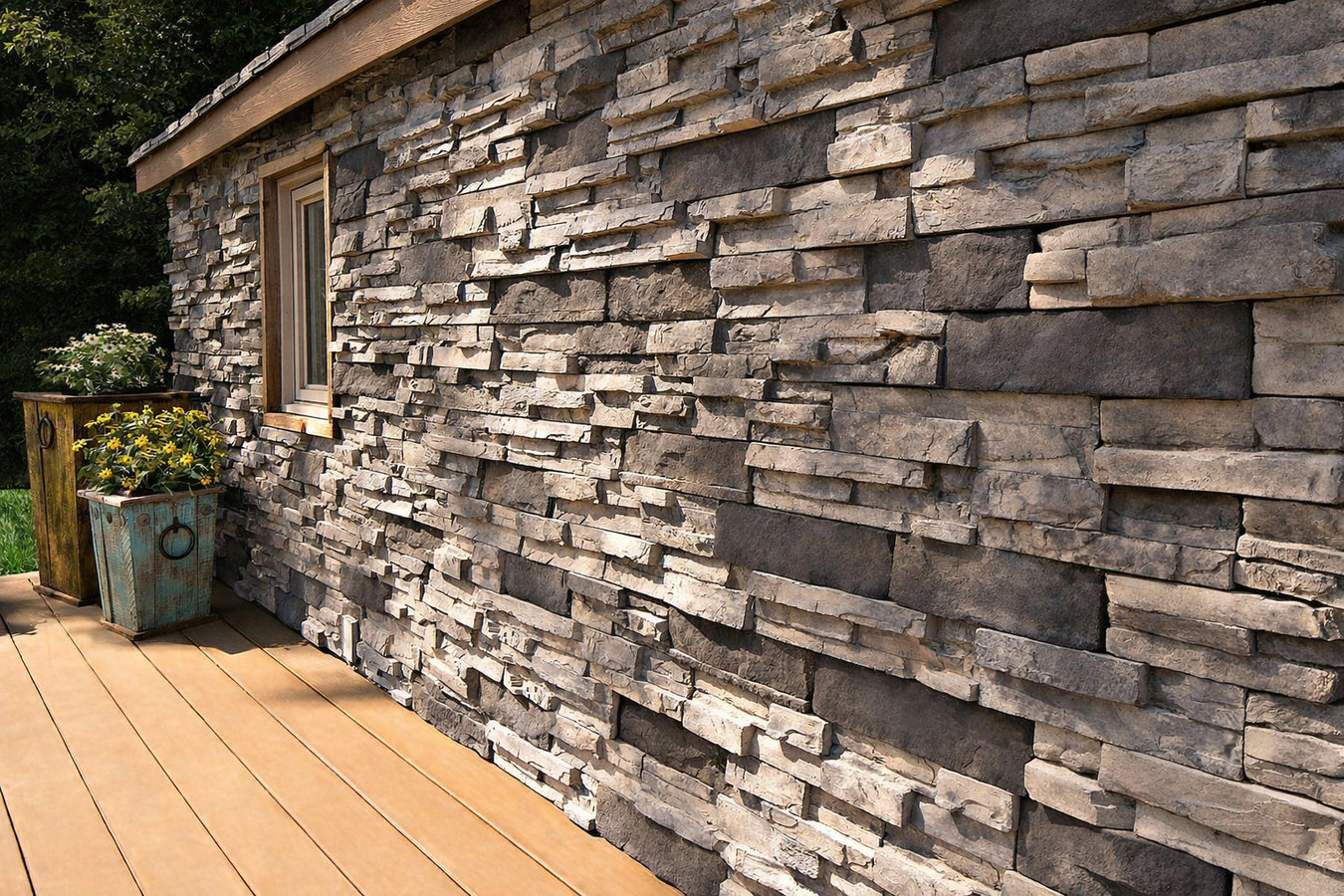
Your home looks dated, or your foundation needs a refresh. We install real and manufactured stone veneer that holds up through Pennsylvania winters and looks like it was always there.
Stone veneer installation in Reading means attaching a layer of real or manufactured stone to an existing wall surface, giving you the look of full stone construction without rebuilding the structure. Most residential projects - a front foundation, porch columns, or an interior fireplace surround - take two to five days of active work.
Reading has a large share of homes built before 1950, many with plain concrete block or painted brick foundations that were never the intended final finish. Stone veneer is one of the most durable ways to refresh that look. If moisture is already showing up as white staining or efflorescence on your lower walls, a veneer installation with a proper moisture barrier can address the appearance and add a layer of protection. For projects where the underlying masonry needs repair first, our masonry restoration work addresses the structure before the veneer goes on.
The single biggest factor in whether veneer holds up for decades or starts to loosen early is surface preparation. A moisture barrier on exterior walls, a proper scratch coat, and mortar suited to Berks County freeze-thaw conditions are not optional extras - they are what separates work that lasts from work that calls you back in two winters.
If your foundation, front wall, or porch columns look faded, have crumbling stucco, or are plain concrete block, stone veneer is one of the most durable ways to refresh the look without a full rebuild. Many Reading homes have foundations that were never meant to be the finished surface - veneer brings them up to the character of the street.
Crumbling or missing mortar is a sign water is getting in. In Reading freeze-thaw winters, that damage accelerates quickly. A mason can assess whether the existing surface can be repointed or whether a fresh veneer installation over properly prepared masonry makes more sense for the long term.
Efflorescence - the white, chalky residue on masonry - appears when water moves through the wall and deposits minerals on the surface. It is common after Reading wet springs. Stone veneer with a proper moisture barrier behind it can address the appearance, though the underlying water source should be identified first.
Stone veneer is not just for exteriors. A fireplace with a plain drywall or painted block surround, or a basement accent wall that needs character, can be transformed in a few days with interior veneer - a relatively contained project with a big visual impact.
We install both manufactured and natural stone veneer on residential properties throughout Reading and Berks County. Exterior applications include foundation skirts, full facades, porch and column cladding, and retaining wall faces. Interior work includes fireplace surrounds, basement accent walls, and entryway features. Every exterior installation includes a water-resistive barrier and scratch coat - standard in our scope, not an add-on. When an existing wall needs structural attention before veneer can go on, we tie that repair into the same project scope.
Stone veneer pairs naturally with other masonry work. Homeowners who want a cohesive look across a project often combine veneer with concrete block walls for retaining or boundary structures, or with stone masonry work where full-thickness stone is the right fit for the application.
Best for homeowners who want consistent color and pattern options at a lower cost per square foot.
Best for homes where authentic variation and regional material character matter - common on older Reading-area properties.
Best for homeowners refreshing a plain or dated concrete block or stucco foundation without rebuilding.
Best for homeowners who want a contained project with a dramatic visual result in a specific room.
Reading sits in a climate zone where temperatures regularly cross the freezing mark throughout winter and early spring - sometimes multiple times in a single week. That repeated freeze-thaw cycle is hard on exterior masonry. Water seeps into tiny cracks in mortar, freezes, expands, and widens those cracks over time. For veneer, this means the mortar mix, moisture barrier, and joint finishing all have to be done with Pennsylvania winters in mind. Contractors who work across warmer regions and treat the job as a warm-weather installation will produce work that starts to fail within a few seasons here.
Reading also has a large stock of older homes - many built between 1900 and 1950 - with brick or concrete block exteriors that need careful assessment before veneer goes on. Soft spots, old repairs, and moisture damage behind existing walls are common findings, and skipping that prep phase is what causes veneer to loosen. Homeowners in Wyomissing, PA and West Reading, PA often have newer exterior surfaces that are easier to prep, while properties closer to the city core frequently need more time in the assessment and preparation phase. We work across the full Berks County area and know what to look for in each neighborhood.
When you reach out, we ask a few questions about the wall, the size, and whether it is interior or exterior. We schedule an in-person visit because veneer pricing depends heavily on what the existing surface looks like. Expect a 20-45 minute visit with no obligation and a written estimate before you decide anything.
Once you have a quote you are comfortable with, you choose the stone style, color, and pattern. We direct you to suppliers who carry both manufactured and regional natural options. Take time with this - the stone you choose will be on your home for decades, and it is worth seeing samples in natural light against your existing materials.
The crew cleans the surface, repairs any damage, installs a moisture barrier on exterior walls, and applies a scratch coat of mortar. On older Reading homes this step sometimes surfaces surprises - soft spots or hidden moisture - and we walk you through any issues before proceeding. No work continues without your sign-off.
Each stone is set individually from the bottom up. Joints are filled and finished, mortar residue is cleaned from stone faces, and sealant is applied if included in the scope. We walk you through the finished surface before we leave and give you plain-language care instructions for that first winter.
Written estimate, no obligation. We are a state-registered Pennsylvania contractor.
(484) 516-0656We use mortar formulated for Pennsylvania freeze-thaw conditions on every exterior project. That means specifying the right mix for the temperature range and the substrate - not a generic bag mix from a hardware store. It is the single biggest factor in whether veneer stays tight through 10 winters or starts to crack by year three.
Every exterior veneer installation we do includes a water-resistive barrier behind the stone. Some contractors treat this as optional or an upgrade. We do not - water getting behind exterior veneer is the most common cause of early failure, and in Reading wet springs and winters it is a real risk. Ask any contractor you are comparing us to whether the barrier is in their standard scope.
Pennsylvania requires any contractor doing home improvement work to be registered with the state Attorney General office. Our registration is current and verifiable at the Pennsylvania AG home improvement lookup. If a contractor cannot give you their registration number, that is a red flag worth acting on before you sign anything.
Berks County has a long tradition of fieldstone and limestone construction. We help homeowners choose stone that fits their home age and architectural character - not just whatever is in the nearest catalog. A veneer that looks out of place on a 1920s Reading home is a missed opportunity. The Masonry Veneer Manufacturers Association publishes installation standards we follow on every project.
Every stone veneer project we do in Reading comes with a written estimate, transparent prep scope, and a contractor who can be verified through the state. We want you to be able to tap the wall after it cures and know it is solid - not just take our word for it.
Need a block wall to complement your veneer project - for a retaining wall face or garden border? Block walls and stone veneer often go together on the same property.
Learn MoreWhere full-thickness stone construction is the right fit - for pillars, steps, or structures that need the weight and depth of real stacked stone rather than a veneer layer.
Learn MoreSpring booking slots fill fast - reach out now to lock in your project before the summer rush.